

For a long time I have coached people who run companies. CEOs, vice presidents, partners. People responsible for thousands of employees and for results that make the news. Before any question about training, the sentence I hear most is always the same: "I don't have time."
I understand. And I disagree.
Not because these people's schedules are light. They aren't. I disagree because, over the years, I have seen the same pattern repeat itself: people who train don't find time. They make it.
The executive who travels 70% of the year
Marvio Portela is Senior Vice President of the Global Commercial Sector at SAS, a global analytics and artificial intelligence company. He travels about 70% of the time, works across time zones and has a family. He has trained with me for some years. And he finished an Ironman.
I asked him how. The answer came straight:
"If I had waited for free time to train, I probably would never have finished an Ironman. So I learned to make time, instead of waiting for it to show up."
In practice, that means waking up at 5 a.m. in whatever country he is in. Adapting the session to the hotel and the circumstances. Doing what is possible when the ideal doesn't fit. And accepting something many high performers take a long time to accept:
"Motivation helps you start, but discipline is what keeps you going. And consistency doesn't mean perfection."
For him, an Ironman is not the product of one extraordinary day. It is the result of "hundreds of ordinary days in which you decided not to give up."
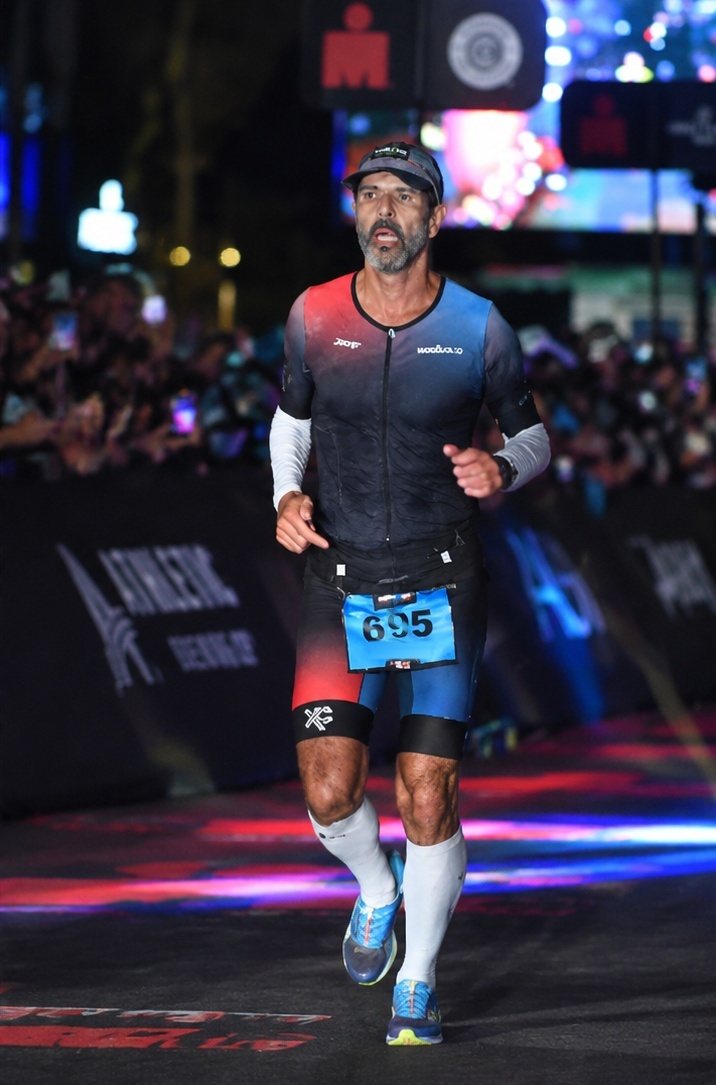
Stop looking for time and start setting priorities.
What the data showsand what it doesn't
People who lead companies know how to read a study. So let's be precise.
- 1Marathon-running CEOs and firm value. Peter Limbach and Florian Sonnenburg (University of Cologne, 2015) analyzed the CEOs of S&P 1500 companies between 2001 and 2011, using the completion of a marathon as a marker of physical fitness. Firms led by marathon-running CEOs showed a market value about 5% higher. Among older CEOs, those longer in the job or with a heavier workload, the gap reached 8–10%.
- 2The day you train. Coulson, McKenna and Field (International Journal of Workplace Health Management, 2008) compared exercise and non-exercise days in the same professionals. In about 200 people, exercise days brought better time management, better mental performance and more tolerance of themselves and their colleagues.
- 3The brain that trains. A meta-analysis of randomized trials (Smith, Blumenthal and colleagues, Psychosomatic Medicine, 2010) associated aerobic training with modest improvements in attention, processing speed, executive function and memory.
Study 1 shows association, not causation: it doesn't prove that the marathon makes the company worth more. Study 2 measures self-reported performance. Even so, the most interesting finding of the first is where the effect is strongest: exactly where the pressure is highest.
None of these studies says that running will make your company worth more. They say something more useful: a body that trains better supports the mind that decides.
Race pace is leadership pace
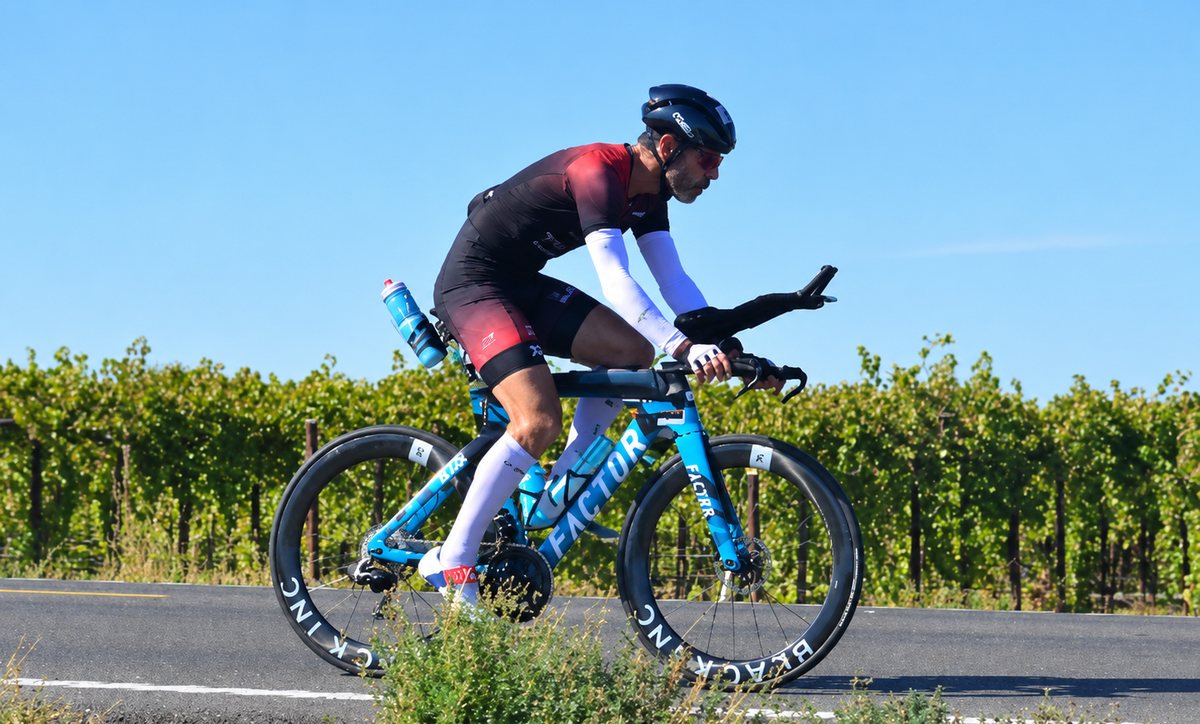
In an Ironman, whoever goes out at full gas pays the bill on the marathon. The game is managing energy for many hours, with strategy, accepting that there will be hard stretches. Marvio takes this into management:
"There is no point chasing extraordinary short-term results if you are compromising your team's ability to keep delivering in the future."
There is a second lesson, perhaps the most valuable: learning to separate discomfort from impossibility. Almost always, when we think we have reached our limit, there is still room to move forward. Whoever learns this in a long race brings it to the boardroom.
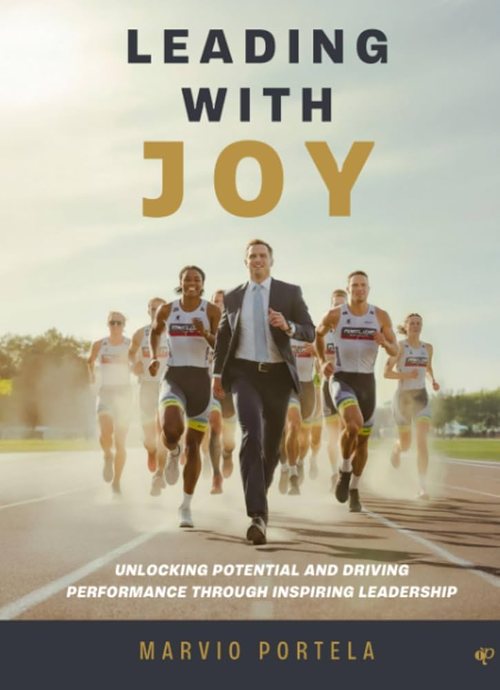
"Discipline without kindness can destroy people, while kindness without discipline produces no results."
Marvio PortelaSee the book on Amazon →
Where to start
I asked Marvio for advice for the executive who says he has no time. The answer was the sentence you read above, next to the finish-line photo: stop looking for time and start setting priorities.
Nobody needs to do an Ironman. Nobody needs to wake up at 5 a.m. But thirty minutes of activity beat none, and the perfect schedule will probably never exist. My favorite line from our conversation:
"Training isn't taking time away from work. It's investing in your ability to work better, make better decisions and have more energy for your family."
Why I write this
At CMTeam, we are small by choice. Few athletes, followed closely, with a plan that fits real life, including the life of someone who spends more time in airports than at home. Our athletes stay with us for 11 years on average. Some, almost 20.
This text is the start of a project about endurance and what it teaches those who lead. It comes in parts, with real stories of executives who train with me.
Forward this text to him.

Free e-book · PT · EN · ES
The Mind Runs First
Quick lessons for a stronger mind in sport. While the project on endurance and leadership takes shape, start here.
Download free →Limbach, P.; Sonnenburg, F. Does CEO fitness matter? CFR Working Paper no. 14-12, Centre for Financial Research, University of Cologne, 2015.
Coulson, J. C.; McKenna, J.; Field, M. Exercising at work and self-reported work performance. International Journal of Workplace Health Management, vol. 1, no. 3, pp. 176–197, 2008.
Smith, P. J.; Blumenthal, J. A.; Hoffman, B. M. et al. Aerobic exercise and neurocognitive performance: a meta-analytic review of randomized controlled trials. Psychosomatic Medicine, vol. 72, no. 3, pp. 239–252, 2010.
Portela, M. Leading with Joy: Unlocking Potential and Driving Performance Through Inspiring Leadership. 2026.